



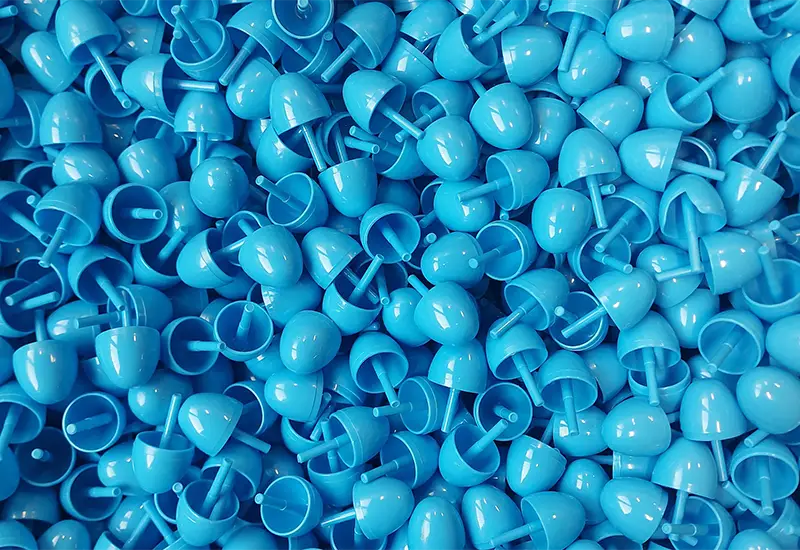
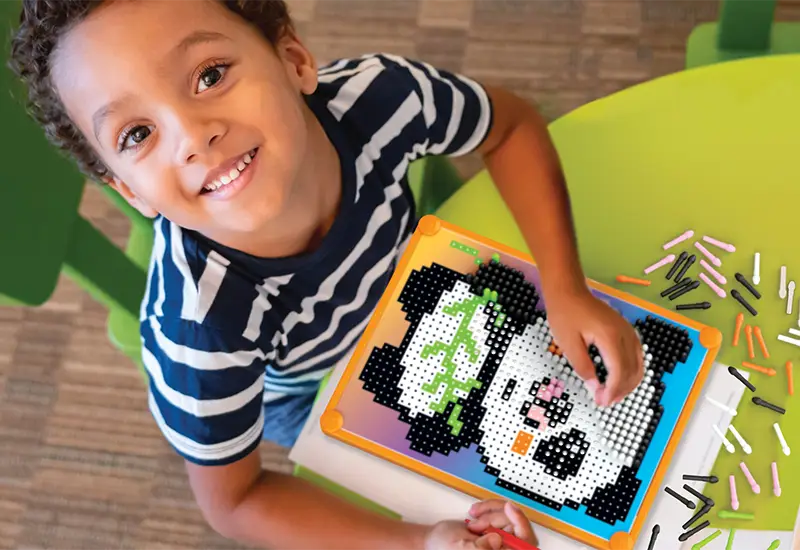

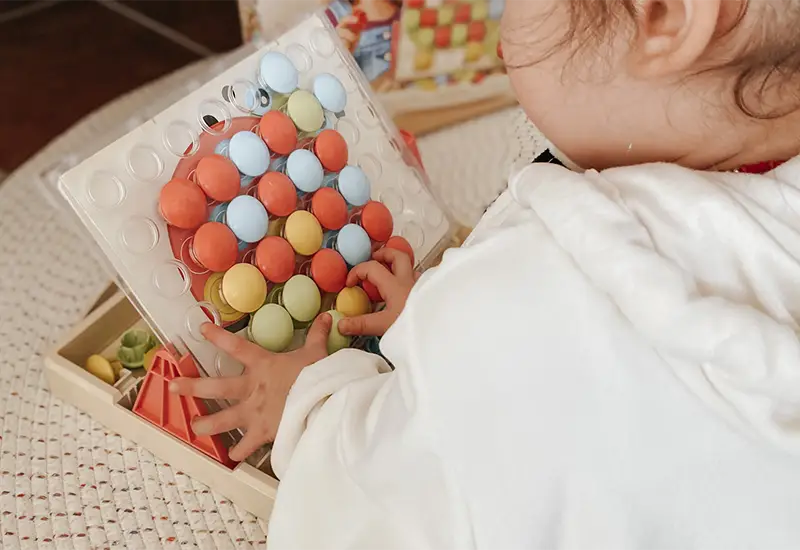


In 1950, Alessandro Quercetti founded Quercetti & C. in Turin, an example of one of the longest-running toy companies in Italy. Seventy years later, time at Quercetti seems to have stood still. The factory is bigger and more advanced, but the name on the door is still the same. The company is still run by the same family, this time by Alessandro’s sons: Alberto and Stefano. The toys have evolved, but the imprint is the same as the one established by Alessandro seventy years ago. Traditional, manual, smart toys. And the star of the company is still the “Peg”, an incredible invention by Alessandro Quercetti that made the brand and its toys recognizable all over the world.
Instead of jumping on board the digital bandwagon, the company has opted to focus on the quintessential traditional game. All its games run on so-called “child energy”, i.e., there are no batteries, cables or touchscreens. Quercetti starts from the premise that children need hands-on experimentation with the environment and objects in order to develop. The body is a formidable learning tool. Children need to learn how to use all of it, not just one finger. Kids’ hands need to touch, throw, hit, slot and stack objects to understand them and accumulate experiences and memories from this type of knowledge. This decision seems to have paid off for the company, and not just in terms of sales. Some of its toys, like the Pixel Art pegs and Migoga Junior marbles track, were selected by the ADI Committee – the Industrial Design Association – to officially compete for the Compasso d’Oro. The new sustainable game, Fantacolor Baby Bio, was awarded best preschool toy title in the 2020 Toys Awards.
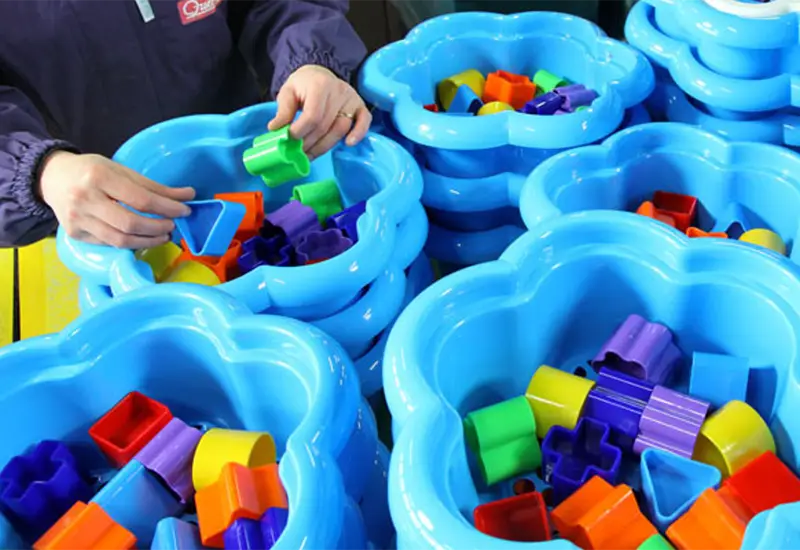
All the company’s production is carried out in Turin, with direct control over the entire production process and materials used, from the idea, concept, prototyping, engineering, rendering, mold making, injection molding, assembly, packaging, and warehousing, through to the shipping of the finished product. Everything is aimed at achieving the very best result: producing high-quality games and toys that communicate with children, inviting them to explore and be inquisitive.
This is such a well-oiled mechanism that even today, in the age of multinational corporations, globalization, and exaggerated and accelerated manufacturing, toys are still made in this little haven in the center of Turin. And they are made by hand, assembled by people and not machines. It is the team that invents, plans, and designs the toys that breathes life into the company. Nothing is outsourced and nothing is imported. The peg is still made in the city of Turin. All the work, from the design of the toy to the packaging of the end product is carried out from start to finish in Corso Vigevano, Turin. The entire production cycle is carried out in Italy. The workers reside locally, and this creates an essential resource in the region.
In over seventy years, Quercetti has never lost sight of its identity and has never had to compromise. Because to make toys that offer children a broad range of experiences which arouse a long-lasting rather than short-lived interest, and to make products that are useful rather than just eye-catching, you need to have an excellent appreciation of children’s intelligence.